
For an author, nothing is quite as bad as a book signing gone bad.

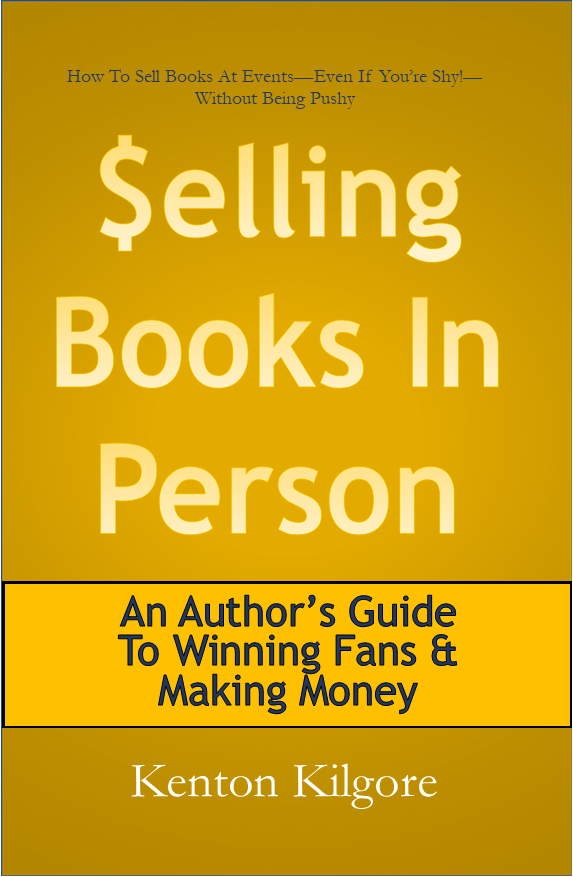
Earlier this year, I released the second edition of Selling Books In Person: An Author’s Guide To Winning Fans & Making Money, to help fellow writers with their book signings and live sales. Accordingly, I’ve been putting my money where my mouth is by doing many such events this year.
While some of them have been very successful and lucrative, some have been downright awful, absolute wastes of time, energy, and resources. These are the book-selling events where I’ve been standing around, twiddling my thumbs, sighing and shaking my head, being lucky to make enough money to pay for gas and fast food on the way to and from.
It’s happened often enough that now, I can see the bad ones coming. Writers, consider this post an addendum to Selling Books In Person, and learn from my misfortunes.
There are several factors that can lead to a book signing going bad. Having one or two of these factors isn’t necessarily predictive of a poor outing, but three or more almost always are. And what are they?
1. Bad Organizers. Most of the people running the events that I’ve been to lately have been very good. They’ve run similar events before; they act professionally, even if they’re volunteers; they have their [poop] together; and they want to ensure a good experience for their vendors and customers.

Alas, not all the people I’ve interacted with have been so. A few had been disorganized; or were inexperienced and in over their heads, trying to do too much; or they plainly didn’t care what happened once they collected their vendor fees.
2. Bad communication. This is a common attribute of bad organizers.Well before an event, the organizers should set your expectations with thorough emails that give you all the details of where you need to go and what to do, at what time, and whom to contact if you have questions, before, during, and after the event itself.
Again, most people are good about this, but some are terrible. If it’s the morning of your book signing and you still aren’t sure where you’re supposed to be, what your setup will be like, or who to ask, that’s most likely not your fault.
3. Bad fees. The people hosting the event are also on the hook for fees that are unjustifiably too high. If I’m paying north of $100 for a vendor fee, I expect a big, attractive venue with thousands (or tens of thousands) of attendees coming to an exciting, well-publicized event. I don’t want to be in some rinky-dink hall with a few dozen people who just happened to see a sign outside and had nothing better to do than stop in and take a look at what might be going on.
I’m not opposed to participating in small events, or those that are happening for the first or second time. But I am opposed to paying vendor fees similar to those for larger, popular, well-established events. Small event = low fee. That’s how it should be, anyway.
4. Bad venue. The place where you have your signing should be easy for people to find and get to, and it should have ample and easy parking. Venues on or just off a major road are best; those out in the sticks, well-off the beaten path, are less desirable. Pro tip: the more signs that people have to follow to get to your event, the fewer people who will actually come.
The absolute worst that I’ve ever been to recently was at an outdoor strip mall several streets from a highway, on the second floor, up a flight of stairs (or a very slow elevator), around a corner, towards the rear, and in a back room. In the two hours that I was there, perhaps as many as twenty people showed up. The store that was running it should have held it on the very wide space in front of or next to their store, or out in the parking lot.
Inside the venue where you’re selling should be spacious and decorated nicely, with good facilities (I cannot overstate the benefits of close-by and clean rest rooms), and plenty of food options inside or a short walk away. Bonus points if it’s not too loud: it’s hard to tell people about your books if you have to shout over whatever else is going on.
Environmental factors shouldn’t be an issue, but if they are, they can be significant. One venue that I went to in August didn’t turn on their air conditioning until after they opened the doors to the public, so the first few hours were toasty. Fortunately, I had packed a neck cooling towel that I keep for outdoor events, so I was okay, but other people were sweating like apes.

5. Bad spot. While you can’t always have your booth or table right by the main entrance, where the attendees come in, you don’t want to be tucked away in some corner in the back, where the only people who might see you are the staff. Or you don’t want to be selling kids’ books next to someone who’s peddling smutty artwork or drug-related stuff (I was once put right alongside someone who sold hand-made weed pipes).
If you recognize before you set up that you’re going to be in a bad spot, then ask the organizer if they can move you. Sometimes they can, and they will, because good vendors want you to succeed. Sometimes, despite their intentions, they can’t, because of space constraints, and you’ll just have to deal with it.
6. Bad trip. Earlier this year, I made a few very long car rides of 3+ hours each way to venues, but I don’t anymore. My limit now is two hours each way, and even then, it has to be for a Really Big Event (as I refer to them in Selling Books In Person) where I have a very good chance of making a lot of sales and profit.
How come? It’s not so much the money spent on gas and tolls and burgers there and back again, it’s because time has a value, too. It’s simply not worth it to me to get up before dawn, drive 7 hours round trip, stand around all day, and net all of $50, as happened to me when I went to Virginia Comic Con this summer.
7. Bad Weather. I discuss this in Selling Books In Person, but it’s worth reiterating. Even if your event is indoors, bad weather will severely affect it, because few people want to come out in pouring rain, or a snowstorm.
If you’re outdoors, rain can ruin your books: you’ll not only waste the money you paid for them, you’ll lose the profit you would have made from selling them. Wind can flip your canopy, blow down your signs, and scatter lightweight promo materials like cards and flyers. Extreme heat or cold will keep customers away and make you miserable as you stand around for hours.
Good organizers will keep an eye on the weather, call off or shut down early events when bad weather hits, and refund your fee or offer to reschedule you for free. Bad organizers hold the event anyway, and don’t offer you any compensation for your poor showing.

This happened to me about six weeks when a one-day outdoor event that I paid $120 for decided not to cancel despite the remnants of a tropical storm going through the area. When the rains got really bad, I pushed my table under the center of my pop-up, stacked all my boxes of books on it, and prayed that the canopy held.
8. Bad Fit. Even if you have a lot of people show up to your book signing event, sometimes they’re just not interested in what you have to offer. While it should be obvious to you ahead of time that your military special forces thriller is not going to do well at a spicy romance convention, it can be a surprise when your epic fantasy trilogy fails to impress at a comic con.
It’s happened to me several times that books that sell great at certain venues hardly do anything at similar events elsewhere. The flip side is that sometimes, books of mine that usually don’t sell all that much are more popular in some places than my heavy hitters.
I’ve never been able to identify why this has happened, or been able to draw many conclusions. People will surprise you, so despite your best efforts, you can’t always tell if your books will resonate with them.
What To Do?
So, you’ve found yourself at a bad book signing. What to do? Here are a number of options, some of which you can combine.
Keep Trying. If there’s a lot of foot traffic going past your table, you can persevere. Maybe you’re not going to hit whatever selling goal you set for yourself beforehand, but a few sales are better than none at all. In situations like this, I’ve had many writers tell me that they’ll settle for “making back my table fee.”

It’s an understandable sentiment, but bear in mind that it’s not as simple as selling five books at $20 to cover a $100 vendor fee. Not when those books cost you $7.25 each (printing + shipping + tax), so really, you have to sell eight to break even, because you’re not making $20 with each sale, you’re making $12.75.
Work On Other Things. If there are hardly any potential customers at your event, then it’s a good time to draft a chapter of your next book, edit your manuscript, come up with some Facebook ads, shop from the other vendors, or network with any other writers there. Sure, you may not be making sales, but at the very least, you have a few hours of relative peace and quiet to be productive.
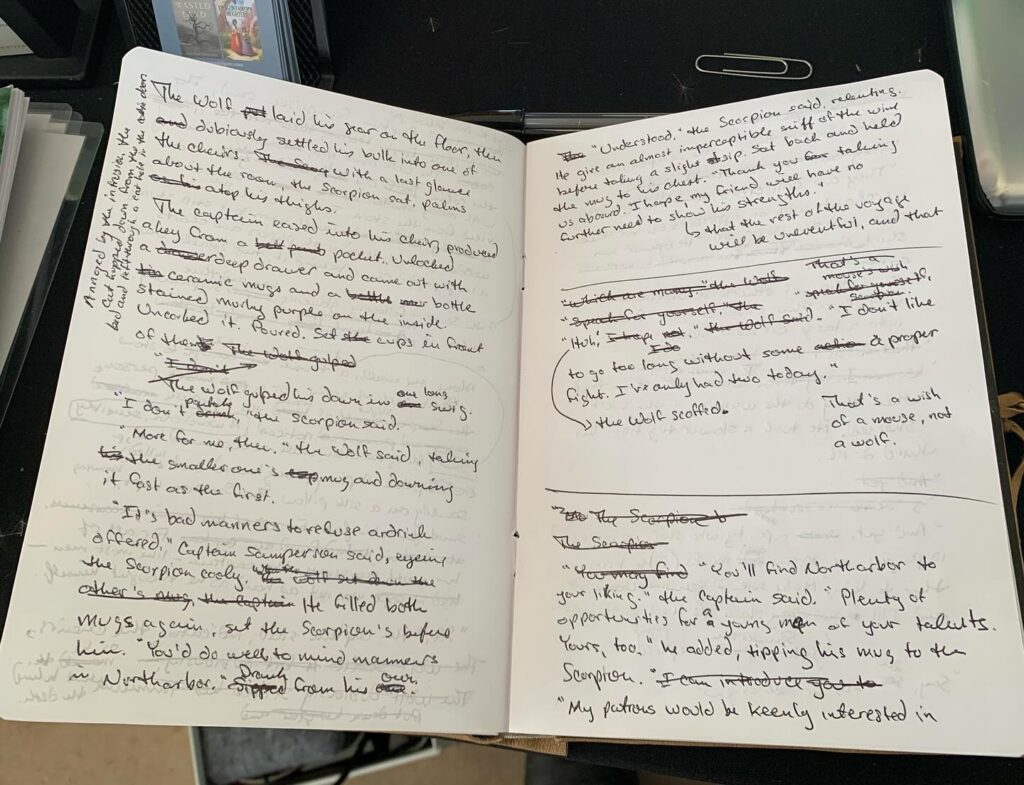
Having more than once lately been stuck someplace with nothing going on, I’ve started carrying my journal with me so that I can work on my next novel. It beats sitting around and poking my phone.
Try Again Next Time. I’m usually willing to give a venue a second chance if I recognize that the event went lame because of something outside of the organizers’ control, such as unexpected bad weather*, or something else big going on that no one considered. If the person running it is willing to let me come back again for free, I’ll almost always take them up on it.
*That tropical storm I mentioned earlier was far from “unexpected.” Everyone on the East Coast had been watching it for days.
Don’t Go Back. Sometimes, though, an event sucks, and it’s because of something that someone—you and/or the organizer—should have seen coming. If the problem doesn’t get fixed, there’s no point in going back and hoping for the best, because hope is not a strategy. Write down where and when this failed show happened, consider it a lesson learned, and focus on your next event.
Come To Terms With It. If you don’t have a lot of venues in your area, or not many at a particular time of year, maybe you go back to a venue that wasn’t so great, but didn’t absolutely suck, just for the sake of making what sales you can. It’s not optimal, but it makes you enough money to make it worth your while.
Where I live, there’s an open-air market that runs several times a year. I’ve sold at it many times, and though it rarely does spectacularly, I’ve always made decent money from it. The vendor fee is only $30, it goes to a charitable cause, and it’s literally a three-minute drive from my house: if I wanted to, I could easily walk to it. If nothing else is going on, if I don’t have any other selling options, I peddle my books there.

Bail. Sometimes, a selling event is so bad that the best you can do is pack up before it’s scheduled to finish and get out of there. Don’t fall for the sunk-cost fallacy: the vendor fee you paid is gone whether you sell one book, two books, or none, and you’re highly unlikely to get a refund. Nor are you getting back the hours and gas you spent driving to this suckfest. At this point, all you can do is not waste any more time.
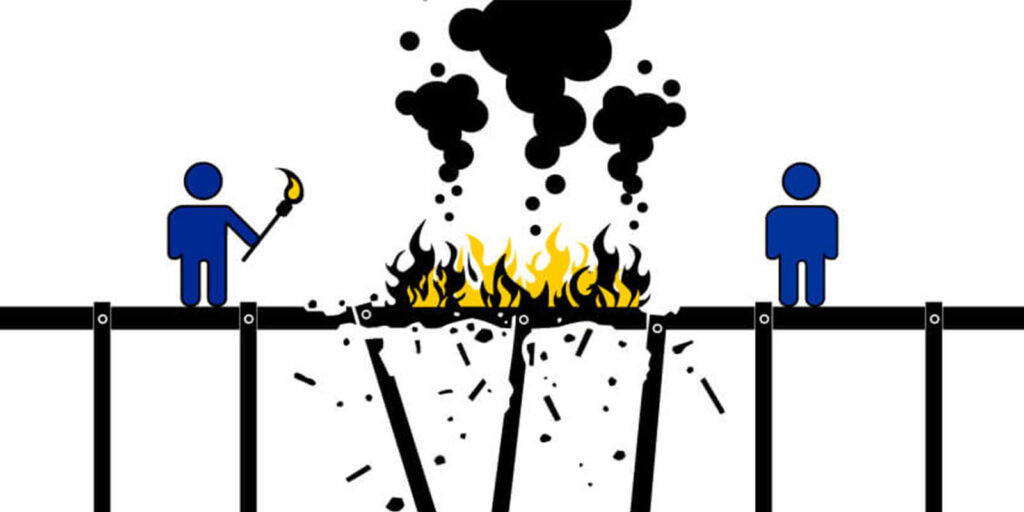
Bear in mind that many organizers take a dim view of vendors leaving early, and will not accept your application for a future event they might hold. Only bail if you’ve decided that you’re never coming back under any circumstances, and that you’re okay with burning this particular bridge. It’s not a decision I make lightly, but I have made it before, on a very small number of occasions.
Conclusion, and Gratuitous Plug
Hopefully, your “bad book signings” will be few and far between, but now you know how to recognize them and what to do next time. Good luck! And if you haven’t picked up a copy of Selling Books In Person, you can find it here for Kindle, and here in softcover.
In this short, easy-to-read guide, I walk you through every step of how to successfully sell books at events, with lots of do’s and don’ts that I learned from extensive experience.
Among the aspects that I discuss are picking the right venue and setting up the display; pricing to make you the most money; how COVID changed book selling; selling at conventions; and my “One-Spoonful-At-A-Time” sales technique that you and your customers will be comfortable with.
Think you’re too shy to meet people and convince them to buy your books? I’ll show you how to overcome that so you can easily engage with potential readers.
Don’t wait any longer: get Selling Books In Person now and make your next book-signing a success!
Kenton Kilgore writes killer sci-fi and fantasy for young adults, and adults who are still young. He also dabbles in children’s books. Follow Kenton on Facebook for frequent posts on sci-fi, fantasy, and other speculative fiction. You can also catch him on Instagram.

Thanks for the information Kenton. If I see the event is going bad, I am usually very grateful for people telling me they have my book, have seen me an another event or at their school, and offers of other events. Churches, craft shows at schools, and libraries are usually not good events for me. Cindy Freland, author of the Chesapeake Bay Adventure series